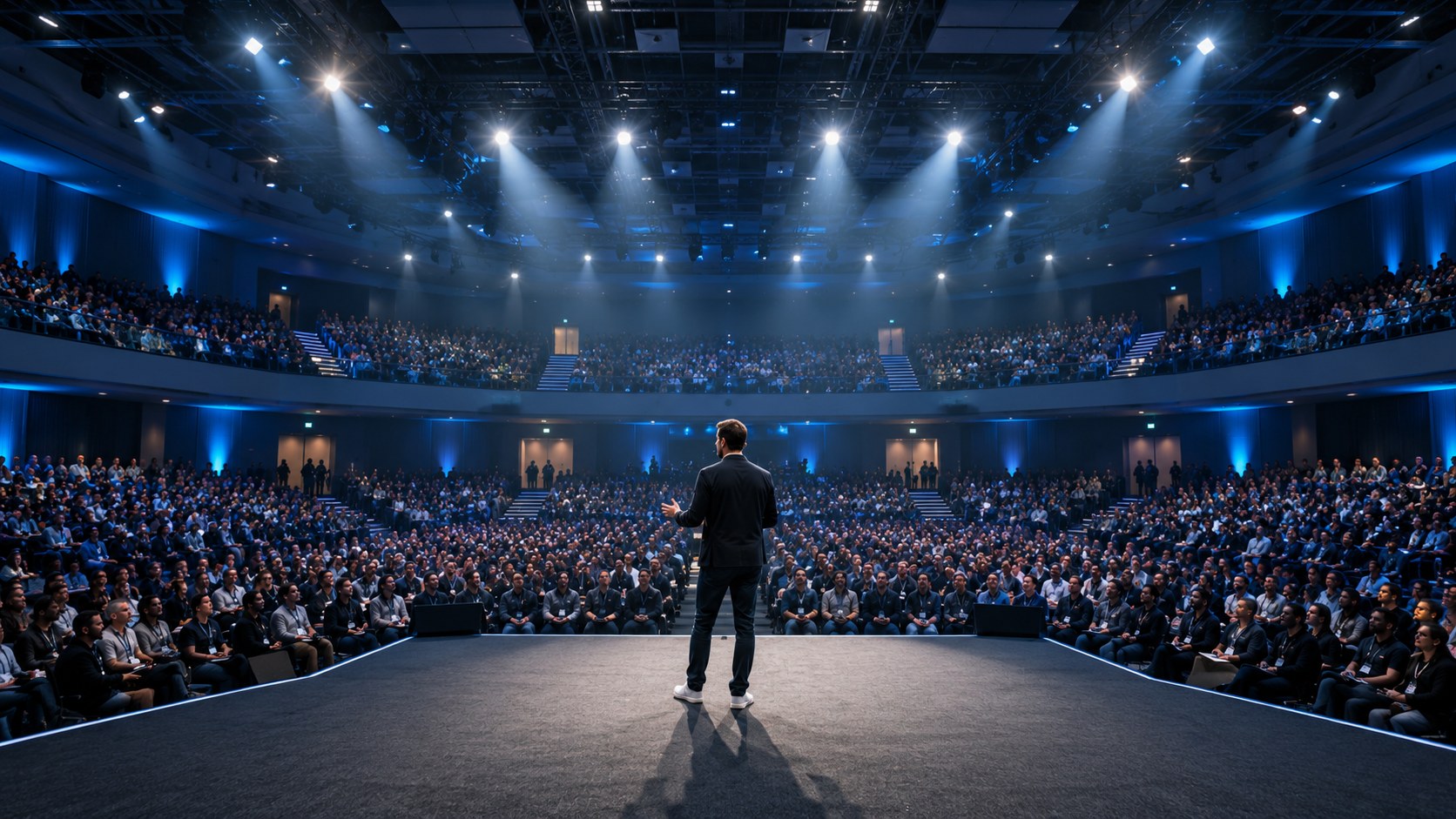
Presentation training for chief executives.
Emirali Advisory gives one-to-one presentation training to chief executives and senior leaders. We help you plan, rehearse and deliver keynotes, investor presentations, panel sessions and staff briefings, and answer the hard questions that follow.
What is presentation training?
Presentation training helps a leader plan, write and deliver a talk that an audience understands and remembers. For a chief executive, this includes keynote speeches, investor presentations, results briefings, staff town halls and panel sessions. Good training covers the content, the delivery and the questions that follow.
Senior leaders speak to mixed audiences. A talk to staff may be quoted by a journalist. A conference session may be filmed and posted online. An investor presentation may be read closely by analysts and regulators. Each word needs to be accurate and each claim must be one you can support.
We work with leaders one to one, or with small leadership teams. The aim is a clear message, delivered calmly, in the leader's own style.
Who this training is for
- New chief executives. Leaders in their first months, who must set out a plan to staff, investors and partners.
- Results-day speakers. Chief executives and finance directors who present results to analysts and take questions on the numbers.
- Keynote and conference speakers. Leaders who speak at industry events, where the talk is often filmed and shared.
- Panellists. Leaders who must make a point in a short time, share a stage with others and handle challenge from a chair.
- Leaders facing difficult news. Restructuring, redundancies, a merger or a failure that must be explained to staff in person.
What a public speaking coach works on
A public speaking coach looks at what you say and how you say it. Our sessions cover these areas:
- Structure. One main message, a small number of supporting points and a clear opening and close. The audience should be able to repeat the main message afterwards.
- Writing for the ear. Short sentences, plain words and round numbers. Text written to be read often sounds stiff when it is spoken.
- Slides. Few words on each slide and one idea per slide. You should be able to give the talk if the screen fails.
- Voice and pace. Speaking more slowly than in conversation, pausing after key points and breathing at natural breaks.
- Eye contact and movement. Looking at people in different parts of the room, standing still when you make a key point and using notes without reading from them.
- Questions and challenge. Preparing answers to the hardest questions, answering them directly and saying so when you do not know.
- Online and hybrid events. Camera at eye level, looking at the lens, good light and sound, and including people in the room and on screen.
How our presentation training works
Brief
We agree the event, the audience, the message and what you want the audience to do or think afterwards. We also agree what could go wrong, such as a hostile question or a technical failure.
Content review
We review your draft talk and slides. We suggest changes to the structure, the wording and the evidence, so that the main message is clear.
Rehearsal on camera
You give the talk as you would on the day. We film it and play it back, so that you can see what the audience sees.
Questions practice
We put the likely questions to you, including the difficult ones, and work on short, direct answers.
Final run-through
A last rehearsal close to the event, in the room or on the platform where possible. After the event, we review what went well and what to change next time.
Executive presence coaching and executive speech coaching
Executive presence coaching is about how a leader comes across in a room, on a stage or on a video call. In practice it means being prepared, speaking clearly, listening to the question, staying calm under challenge and acting in a way that matches what you say.
An executive speech coach works on one specific speech or event. This suits a leader with a major keynote, an annual meeting or a difficult message to staff. Many clients use both: speech coaching for a set event and executive presence coaching over several months.
If you also need the words written, our speechwriting and media training services can be combined with this coaching.
Why leaders choose Emirali Advisory for presentation training
- Experience on live television. Our founder, Leon Emirali, is a regular commentator on BBC News, Sky News, ITV, GB News and Good Morning Britain, with more than 250 hours of live television.
- Experience inside government. He is a former Chief of Staff to a Cabinet minister and has advised Theresa May's Downing Street team on communications.
- Training senior teams. He has trained senior leadership teams on panel and public speaking, and has led media training for a leading UK PR and public affairs agency.
- Senior advisers only. You deal directly with senior advisers, not account teams. We have advised leaders from Aston Martin, easyJet, Virgin Galactic, HM Government, the Premier League and Nissan.
Questions about presentation training
How many sessions does a leader need?
It depends on the event and your experience. A leader preparing for one keynote may need two or three sessions over a few weeks: a content review, a filmed rehearsal and a final run-through. Executive presence coaching usually runs over several months, with sessions before major events and reviews afterwards.
Is the training one to one or in groups?
Most of our work with chief executives is one to one, because senior leaders often rehearse material that is confidential. We also train small leadership teams together, for example before a results day or a capital markets event, so that each speaker knows their part and the questions they will take.
How much does presentation training cost?
Fees depend on the number of sessions, the number of people being trained and whether we also help to write the talk and slides. We agree the fee in writing before work starts. All enquiries are confidential, and we can sign a non-disclosure agreement before you share any material.
What is the difference between presentation training and media training?
The first prepares you to speak to an audience in a room or online, usually with your own slides and a set time. The second prepares you for interviews with journalists, where the journalist controls the questions and the edit. Many leaders need both, and the skills overlap, especially in handling difficult questions.
Can sessions be done online?
Yes. Sessions can take place by video call, which also lets us practise for online and hybrid events. For a major keynote we recommend at least one rehearsal in person, ideally in the venue, so that you can practise with the stage, the screens and the microphone you will use on the day.
How can I control nerves before a presentation?
Nerves are normal, even for experienced speakers. The most reliable help is preparation: know your opening lines well, rehearse the full talk aloud several times and practise the hardest questions. On the day, arrive early, check the room and the equipment, breathe slowly before you start and pause when you need to.
How far ahead should we book a public speaking coach?
Ideally four to six weeks before the event. This gives time to review the content, change the structure and rehearse more than once. We can work to shorter deadlines when an event or announcement is close, but early preparation gives better results and less pressure on the speaker.
More executive communications services
Senior counsel,
on your side.
Tell us what you need. A senior adviser will reply promptly.
020 3984 8541amber@leonemirali.com